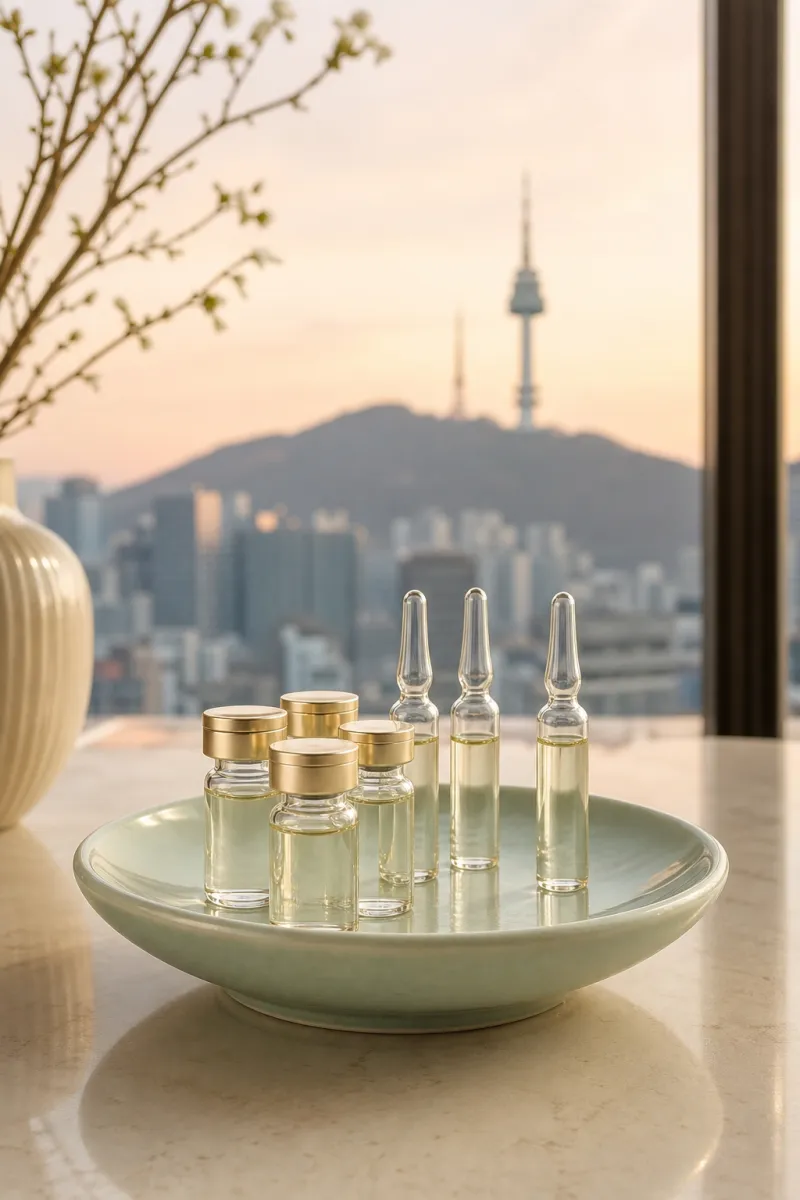
Rejuran Healer in Korea is the original polynucleotide (PN) injectable from the Korean maker Pharma Research, and for many visitors it is the first time they meet the brand behind the PN treatments now sold in Europe, the UK and elsewhere under other names. It is PN, not PDRN, in a water-based solution of about 20 mg per mL, placed as 200 to 300 tiny deposits in the upper skin to support texture, elasticity and fine lines. Small bumps and redness are expected for hours to a day or two, and bruising can last longer. Results build over a course and usually last four to six months. This page explains how Healer compares with PN at home, what the research reviews conclude and how to plan aftercare once you leave.
Guide
Is the PN at home the same product as Healer?
Not necessarily. Polynucleotide is the ingredient, not a brand, and several companies now sell PN injectables with different concentrations, chain lengths and added ingredients. Healer is one specific formula, and within its own range it sits next to HB Plus, which adds hyaluronic acid and lidocaine, and Rejuran i, designed for thin skin around the eyes.
For a visitor, this matters in two ways. A course started at home with another PN brand cannot simply be continued with Healer as if it were the same dose. And a result someone saw after treatment abroad says little about how Healer itself will behave in their skin.
| Point to compare | Rejuran Healer in Korea | A PN course at home |
|---|---|---|
| Product | One defined formula from its home manufacturer | Varies by brand and country |
| How dose is described | Per syringe or cc, spread over the face | Brand-specific units and protocols |
| Session spacing | Planned around a stay, often a short series | Easier to space over months |
| Follow-up access | Remote once you fly home | Same practitioner nearby |
| Regulatory picture | Sold within the Korean framework for this product | Differs by country; gaps reported in some |
Guide
What systematic reviews of polynucleotides actually conclude
The evidence is encouraging but thin. A 2024 systematic review in the Journal of Cosmetic Dermatology by Lampridou and colleagues found nine studies covering 219 patients, all of low or moderate quality. PN injections improved wrinkles, texture and elasticity in several of them, side effects were generally mild and short-lived, and satisfaction was moderate to high.
The same review notes limited consensus on the right areas, techniques and schedule, and calls for larger, better-designed trials. Most included studies used PN products in general rather than one brand, so the findings describe the ingredient class more than Healer alone.
Guide
How regulation can differ between Korea and home
A 2025 review in the Journal of Aesthetic Nursing by Titcomb looked at PN efficacy and at the rules around it in the United Kingdom, and pointed to a clear gap in the regulatory framework for these injectables there. In practice, who may inject PN and how products are classed can vary widely between countries.
Healer in Seoul is used in the country where it is made, which removes one layer of uncertainty about the product itself. It does not remove the need to check. Ask to see the sealed box, the product name printed on it and the lot number, and keep the label sticker or a photo for your records.
Guide
Aftercare and side effects once you are back home
Expect stinging during injection even with numbing cream, then raised bumps at the injection points that usually flatten within a day or two. Redness, swelling and bruising are common; bruising can take about a week to fade. Less often, infection, persistent lumps or an allergic reaction can occur, and PN is derived from fish DNA, so mention any related allergy.
Healer is not appropriate during pregnancy or breastfeeding, over active acne, eczema or infection in the area, or for anyone with a known reaction to the ingredients. Tell the treating doctor about blood thinners. Before flying, write down the product, the amount used and the date, so a doctor at home can see exactly what was injected if a problem appears.
Evidence
Research behind this page
- The Effectiveness of Polynucleotides in Esthetic Medicine: A Systematic ReviewJournal of Cosmetic Dermatology · 2024 · doi:10.1111/jocd.16721
Systematic review of nine low- to moderate-quality studies (219 patients) reporting improved wrinkles, texture and elasticity with mild, transient side effects.
- A literature review on polynucleotide efficacy on skin rejuvenation, and review of the regulatory status and guidelines around polynucleotidesJournal of Aesthetic Nursing · 2025 · doi:10.12968/joan.2025.0009
Literature review of polynucleotide effects on skin hydration and elasticity that also identifies a gap in UK regulation of these products.
FAQ
Questions about Skin boosters in Hongdae
Is Rejuran Healer in Seoul the same as PN injections offered in the UK?
Not always, because PN is an ingredient and several brands sell it under their own names and formulas. Rejuran Healer is one defined product from Pharma Research, while UK clinics may use Healer or a different PN brand. Ask the clinic at home which product it uses before comparing results or doses. If both use Healer, the session plan is easier to continue between the two countries.
Can my practitioner at home continue a course started in Korea?
Usually yes, as long as they know exactly what was injected and when. Bring the product name, the amount used per session and the dates, ideally with the box label or a photo of it. If they use a different PN brand, they may restart the plan rather than count your Korean sessions as equivalent. Results vary from person to person, so a fresh assessment is reasonable.
How many Healer sessions fit into a two-week trip?
Two sessions usually fit, since Healer visits are commonly spaced about 7 to 10 days apart. A full first course is often longer than that, so a short trip gives a start rather than a finished series. Ask the treating doctor whether two sessions are worth doing on their own. Some visitors finish the course at home or on a later trip instead.
Which reactions are normal on the flight home?
Mild swelling, faint bumps and some redness are normal for a day or two after injection. Cabin air is dry, so a plain moisturizer and water help the skin feel more comfortable during the flight. Bruising may still be visible for several days. Increasing pain, heat, spreading redness or pus are not normal and should be checked by a doctor promptly, wherever you land.
Do I need a consultation before the first Healer session?
Yes, a short consultation with the treating doctor should come first. It is where skin type, medications, allergies, recent procedures and goals are checked, and where the doctor decides whether Healer, another line or a different treatment fits. It is also the time to ask about language support and written aftercare. A clinic that also says when not to treat is giving you useful information.
Can Healer be given if I take blood thinners?
Possibly, but the treating doctor needs to know before any injection. Blood thinners and some supplements such as fish oil can increase bruising, and the doctor may adjust the plan or advise waiting. Never stop a prescribed medicine on your own to prepare for a cosmetic treatment. Ask your prescribing doctor first, and give the clinic a full list of what you take.